OmegaOS
Foundations

AI Company Cockpit

AI Company Cockpit explains how buyers and operators learning how OmegaOS product-line operating systems work together can connect Forge, Hermes, Aureus, Mnemosyne, Vortex, Agora, and Vita to company outcomes while preserving the OmegaOS evidence and authority boundary.

hermes-growthpillar:pillar-09-product-line-os-educationcluster:cluster:pillar-09-product-line-os-education:01pillarcockpitinterface
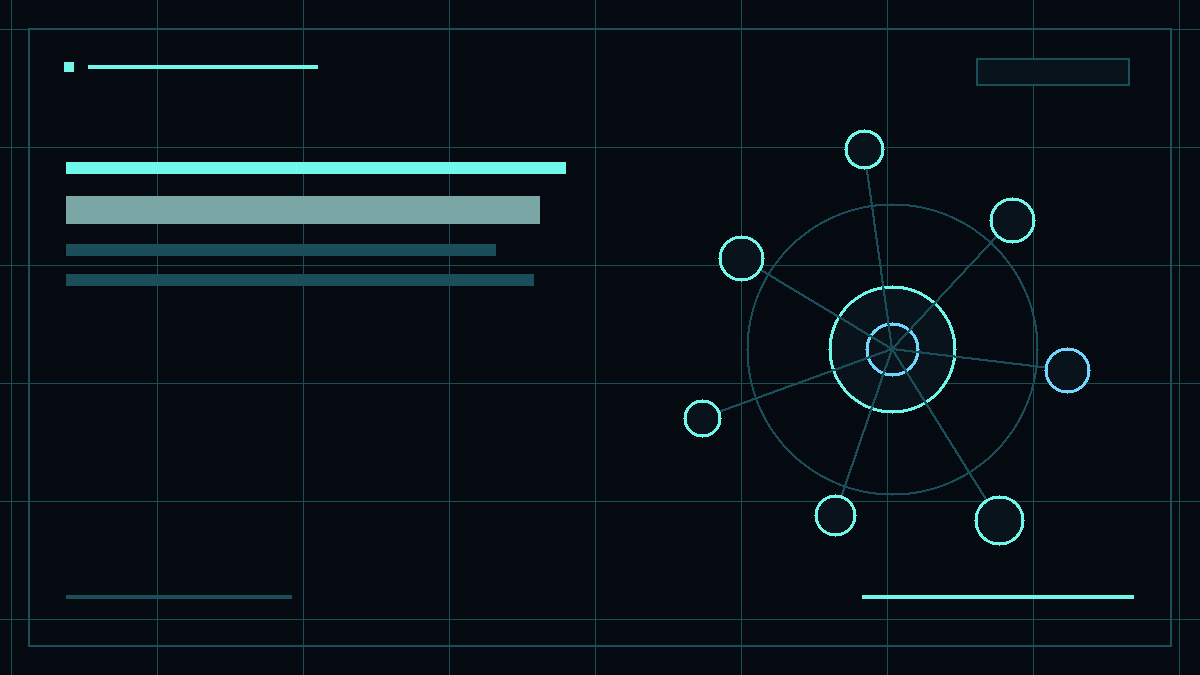
OmegaOS editorial illustration for AI Company Cockpit. AI Company Cockpit public OmegaOS visual showing the main buyer outcome.
OmegaOS editorial illustration for AI Company Cockpit. AI Company Cockpit public OmegaOS visual showing the main buyer outcome. Source: Omega Neural Technologies. Rights: Omega Neural Technologies original editorial asset.

Executive summary

Answer What is AI Company Cockpit? for founder, technology leader, functional executive and connect the answer to the Product-Line OS Education pillar, evidence, and next conversion path.

  • Product-Line OS Education buyer decision checklist
  • current product availability must be verified for the intended configuration
  • outcomes depend on scope, source quality, authority, and reviewed evidence
  • Foundations public guide
Section 1

An AI company cockpit turns operating state into a decision

An ai company cockpit is a decision surface that shows what deserves attention, why it matters, who owns the next judgment, and which evidence supports action. It is not a decorative dashboard or an automatic executive.

What the cockpit is designed to do

A useful cockpit compresses a large operating environment into a small number of inspectable decisions. It connects a signal to its business purpose, present state, accountable owner, permitted next actions, and relevant evidence. The user should be able to tell whether an item is informational, waiting for review, blocked by missing context, or ready for bounded execution. The cockpit earns attention by reducing reconstruction work, not by displaying every metric the company can collect.

The cockpit metaphor matters because it implies active navigation through changing conditions. A cockpit should help a person understand direction, constraints, and consequences while keeping authority visible. It should not imply that one screen contains all company truth or that the person viewing it can command every domain. Source systems remain authoritative for their records, and accountable functional leaders retain judgment over finance, law, security, customers, people, and public commitments.

Who should consider a cockpit

Founders and operating leaders may benefit when their day is dominated by status reconstruction across projects, customer systems, financial reports, documents, and AI conversations. Functional executives may use a narrower cockpit when a recurring decision crosses several systems but still belongs to one operating responsibility. The relevant symptom is not a shortage of charts. It is repeated uncertainty about what changed, what needs judgment, and whether the available evidence is sufficient for the next move.

A cockpit is less appropriate when the underlying workflow has no clear owner, state model, or decision cadence. Putting unstable data on one screen can make confusion easier to see without making it easier to resolve. A team should first define the decisions it is trying to support, the sources that inform them, and the actions the viewer may legitimately take. Interface investment should follow operating clarity rather than substitute for it.

Section 2

Model decisions before choosing metrics

The cockpit should begin with a decision inventory. Metrics, alerts, queues, and maps then earn a place by helping a named role make one of those decisions with less ambiguity.

Use an operating state model

For each recurring decision, define the trigger, current state, intended outcome, accountable role, required evidence, available actions, approval boundary, and stop condition. This state model prevents the interface from treating a revenue signal, security concern, product request, and routine task as equivalent cards. Their urgency, evidence standards, and authority are different. The cockpit can share a visual grammar while preserving those differences in labels, controls, and escalation paths.

State should describe the work rather than the confidence of a model alone. A recommendation may be well formed but still blocked because the source is stale, the customer scope is unclear, or the responsible executive has not reviewed it. Conversely, an item with uncertain prediction may still require immediate human attention. The interface should expose both operating state and evidence posture so fluency or a numerical score cannot silently become permission.

Separate orientation from intervention

Orientation answers where the company is, what changed, and what may require attention. Intervention answers what the user can do now. Mixing these modes produces accidental action: a person exploring a trend may encounter a prominent control that changes workflow state without seeing its consequences. A cockpit should let the user inspect context before entering an action mode, and the action mode should state scope, expected effect, required authority, and whether reversal is possible.

This separation also supports different review rhythms. A morning operating review may scan exceptions, dependencies, and upcoming decisions without executing anything. A domain owner may later open one item, inspect the source package, compare options, and approve a bounded next step. The cockpit remains one coherent surface, but it does not collapse awareness, analysis, decision, execution, and evidence into a single click.

Section 3

A hypothetical cockpit for a product launch

A product launch illustrates how a cockpit can coordinate attention without claiming authority over every participating function.

The operating situation

Imagine a software company preparing a limited launch. Product work is awaiting final validation, sales has several interested accounts, support needs approved guidance, finance is reviewing cost assumptions, and marketing has draft claims. The founder currently assembles status through meetings and messages. The proposed cockpit does not create a universal launch score. It shows five owned decisions, the evidence each needs, their dependencies, and the date at which delay changes the launch choice.

The marketing decision might show that a claim draft exists but its evidence review is incomplete. The finance decision might show that an estimate is available while actual delivery cost remains unobserved. The product decision might be technically validated but not released. Those distinctions prevent a green build, an encouraging forecast, or a polished message from being presented as launch readiness. Each domain keeps its own responsibility while the shared surface exposes coordination risk.

The review and action path

During review, the founder selects the launch objective and sees a dependency map rather than ten unrelated status tiles. Opening the marketing node reveals the exact claim, its sources, the reviewer, and the option to request evidence or narrow the wording. Opening the release node reveals implementation evidence and the separate promotion decision. The cockpit lets the founder coordinate timing, but it does not let that role bypass the owners responsible for claims, finance, security, or release.

After each decision, the surface records the state transition and links to its evidence. If the launch proceeds, the cockpit follows the agreed observation window and shows whether expected signals have arrived. If results are ambiguous, it does not manufacture a success label. The team can compare the original assumptions with observed events, record unresolved factors, and choose whether to expand, revise, pause, or end the launch path.

Section 4

Build the cockpit as a bounded architecture

The architecture should preserve source authority and make the cockpit a composed read-and-action surface rather than a second database of company truth.

Connect read models, evidence, and action contracts

A practical design starts with canonical read models for the decisions in scope. Each read model should select only the state required for that view and retain references to the authoritative records. An evidence package can add source identity, freshness, known conflicts, and review status. The interface then renders a stable contract: posture, owner, decision, evidence, permitted actions, and recent state changes. The cockpit should not scrape arbitrary page text or depend on an untyped model summary as its only source.

Actions need equally explicit contracts. A control should identify the actor, target, requested transition, required approval, expected acknowledgement, and evidence reference. Heavy analysis or execution may continue asynchronously after the user receives a run or request identifier. The cockpit can show progress and exceptions without pretending that submission equals completion. This boundary also makes it possible to test refusals, stale-state conflicts, and unauthorized attempts before expanding the operating scope.

Use progressive detail and stable navigation

The first view should answer a small set of orientation questions quickly. Which outcomes are at risk, which decisions are waiting, what changed since the last review, and where is evidence incomplete? Detail can unfold by outcome, product line, team, workflow, or time horizon. Stable navigation matters because operators build spatial memory. Constantly reorganizing the screen around model predictions can make important state harder to locate and compare.

Progressive detail also limits context exposure. A company-level surface can show that a finance review is blocked without displaying sensitive figures to every viewer. Selecting the item should apply the relevant access boundary before retrieving deeper evidence. This is more responsible than loading all domain data into the client and hiding it visually. Interface composition, retrieval permission, and action authority should agree at every level.

Section 5

Evaluate decision quality, not visual density

A cockpit is valuable only if it helps the intended roles notice, understand, and resolve material operating situations with proportionate effort and fewer avoidable errors.

Test representative decisions

Create scenarios from actual operating patterns before judging the interface. Include a routine approval, a stale source, conflicting domain signals, an unauthorized action, a delayed asynchronous run, and an item that should be ignored. Ask representative users to identify the decision, explain the evidence posture, name the accountable owner, and choose the correct next step. Measure misunderstanding and unsafe action attempts alongside time to orientation.

The evaluation should compare the cockpit with the current process, even when the baseline is imperfect. Useful signals may include less repeated status gathering, fewer ownership questions, shorter time to find current evidence, and more explicit abstention when context is insufficient. Guardrails may include alert dismissal, action reversal, stale-state use, review burden, and sensitive-data exposure. A hypothetical test informs design; it does not prove a customer outcome or performance benchmark.

Watch for common cockpit failures

A cockpit fails when it becomes an executive wallpaper of attractive indicators with no decision path. It also fails when every event becomes urgent, when a composite score hides disagreement, or when a generated explanation cannot be traced to sources. Too much personalization can make shared reviews incoherent because participants no longer see comparable state. Too little domain distinction can make broad platform language appear to override accountable functional judgment.

Another failure is optimizing for fewer clicks while increasing consequence. A one-step approval may look efficient but conceal scope, cost, affected customers, or the inability to reverse an action. The safer measure is not interaction count alone. It is whether the interface gives the responsible person enough context to act deliberately, records what occurred, and offers a clear route to pause or correct the workflow.

Section 6

Place the cockpit inside OmegaOS without overstating it

OmegaOS can provide the broad operating context for a cockpit, while each product-line OS and control plane remains responsible for its own domain rather than becoming a universal company authority.

Respect product-line operating responsibility

A proportionate OmegaOS cockpit could compose decisions from Hermes - CommerceOS, Aureus - FinanceOS, Vortex - OperationsOS, Agora - GovernanceOS, Vita - HumanOptimizationOS, and Mnemosyne - MemoryOS. Forge remains the delivery control plane for governed work intake and execution evidence, while Studio helps maintain a coherent, reviewable Omega interface. These names describe operating responsibilities and surfaces; they do not mean every underlying system, connection, or workflow is automatically available.

The company-level view should therefore summarize cross-domain posture without rewriting domain truth. Hermes may own a commercial campaign decision, Aureus a financial review, Vortex an operating workflow, Agora a governance question, Vita a human-optimization context, and Mnemosyne a source-linked memory concern. OmegaOS connects the operating path and shared evidence boundary. It should not turn a cockpit user into the approver for all of those responsibilities.

Start with one review cadence

The product path should begin with one named audience, one recurring review, and a small decision inventory. Map existing sources and owners, define the important states and permitted actions, design a consistent Omega experience, and run scenario-based evaluation before adding more domains. Where data, permissions, or evidence are missing, the cockpit should show the gap instead of filling it with synthetic certainty.

This bounded start gives an organization a way to judge whether an ai company cockpit improves operating clarity without promising autonomous management. Expansion should follow observed usefulness, controlled access, review capacity, and domain-owner agreement. The interface succeeds when it helps people coordinate accountable decisions across OmegaOS while preserving the limits, responsibilities, and evidence that make those decisions trustworthy.

Share this page

Send this OmegaOS resource to someone working on the same problem.